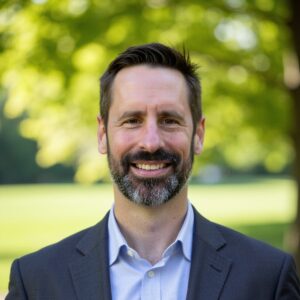
Jason Reed, PsyD, Licensed Psychologist
“If you don’t know where you are going, any road will take you there.”
– Lewis Carroll in Alice in Wonderland
As someone who has seen all sides of the recovery journey, I wanted to build a treatment experience that was more flexible, more human, and more effective, because I believe people with substance use disorder are profoundly underserved by many of the systems meant to help them.
People deserve better, and I wanted to build something better.
A Realization that Changed Everything
My recovery journey began in 2002, and like many people, it hasn’t been a straight line.
For a long time, I was sober and believed that if I just worked hard enough, things would hold. But years later, after the sudden death of my father, I found myself struggling again. I returned to using benzodiazepines to cope with anxiety and a deeper sense that something in my life had come undone.
What became clear during that time was something I had seen in my clinical work as well. Substance use is often the visible problem, but it’s not the whole story. On the surface, it looked like a return to addiction. But underneath, it was something else. I had lost my sense of meaning, purpose, and direction.
When I went back into residential treatment, the focus was what you’d expect: stop the behavior, eliminate the substance use. And that mattered. But it also wasn’t enough. I was discharged from the program after three weeks, given back the bottle of the same pills that got me there, and put on a plane back home by myself. In that moment, I realized recovery ultimately requires choosing a new direction for your life. And no amount of pressure or treatment could make me change until I was ready to choose a different path. I made the decision that day I wanted something different for my life, and fortunately I had the right supports around me to be successful.
What the System Gets Wrong
As a Licensed Psychologist working in addiction treatment, I started to see a pattern. The system is rigid and built around trying to force change with little support in between episodes. Programs are focused on stopping behaviors. Timelines are fixed. Setbacks and returns to use are treated as patient failure instead of system failure. And stigma and shame are still very real.
That didn’t sit well with me. From my lived and professional experience, I know that people didn’t need more pressure. They need trust, support, and the space to reconnect with who they are and where they want to go.
The Testing Ground
Years later, during the COVID pandemic, traditional treatment structures were disrupted. Programs were simplified. Schedules changed. Systems loosened. And yet, people still got better.
It reinforced something I had come to believe. Long-term recovery isn’t built through short-term episodes. It’s built through consistent support and strong relationships over time.
Why Reed Behavioral Health Exists
That’s what led me to build Reed Behavioral Health. I wanted to create something different; a model that doesn’t force change or punish setbacks. A model that doesn’t expect people to operate on someone else’s timeline. A model that helps people move forward when they’re ready, on their terms. A model that works with people, not against them.
So we built it, leveraging clinical expertise and what we have seen actually work, not just status quo models or theory.
Our Beliefs
At Reed Behavioral Health, we believe:
- Recovery is about reconnecting with meaning, purpose and values
- Substance use is often a symptom, not the whole story
- Change can’t be forced, but it can be supported
- Strong relationships are what make lasting change possible
- People don’t need blame. They need trust, support, and a chance to reconnect with who they are and who they want to be.
But, Reed Behavioral Health isn’t just about my story. It’s about what will become possible for your story.
Dr. Reed is a Licensed Psychologist and co-founder of Reed Behavioral Health. He is an experienced addiction professional with a primary focus in substance use disorders, co-occurring disorders and eating disorders. He has worked in a variety of behavioral healthcare organizations in the Twin Cities including Hazelden Foundation, Melrose Center, the Emily Program, and Kodiak Recovery, providing clinical leadership and program development in the area of co-occurring disorders.